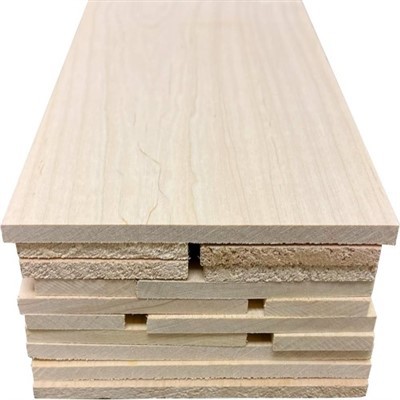
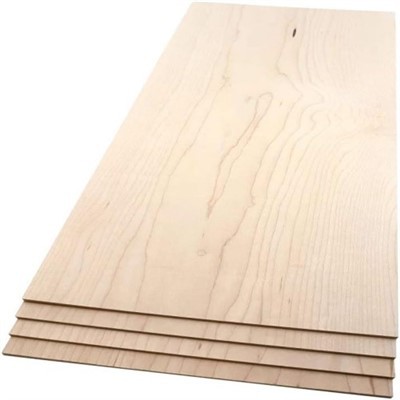
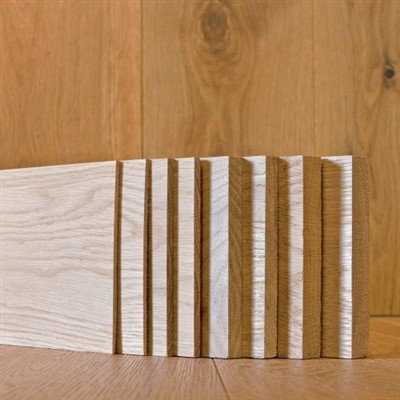
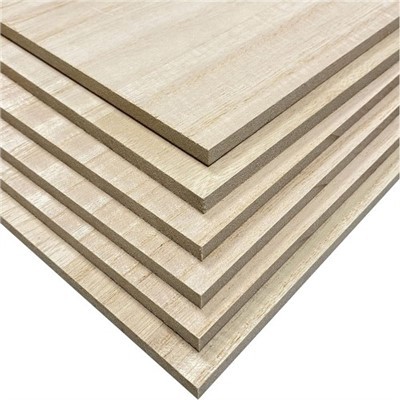
Finger-jointed boards are made of small-diameter wood. They are cut into boards, dried, made into strips, cut, selected, finger-jointed, spliced, and processed to produce wood with a certain width, thickness, and length.
It is a new type of base material used in the construction, furniture, and decoration industries. It has high strength, 1.5 times that of natural solid wood, good fire resistance, and high thermal insulation performance.
(1) Log processing into boards: that is, logs are cut into boards by band saws.
(2) Board drying: mainly through fumigation to dry out the moisture and oil in the wood.
(3) Board processing: After the boards are dried, they are planed on both sides by double-sided planing, flat planing, or pressure planing. Then, the planed boards are cut into strips by multi-blade saws.
(4) Material selection and cutting: The cut wood strips are screened and the wood strips without missing materials, blue changes, cracks, or knots are selected and cut into lengths of 200-700 mm or less.
(5) Finger jointing: The prepared wood strips are sparsely toothed and joined into strips with adhesive.
(6) Planing on all four sides: The joined wood strips are planed into neat square strips by four-sided planing.
(7) Paneling: The square strips are pressed into the required boards by a press.
(8) Planing and sanding: The pressed boards are pressed and sanded to the required thickness.
(9) Repair, sorting, and packaging.